


▎ The semiconductor industry is in a downward cycle, but it doesn't mean a recession, Said Hui He, chief analyst of semiconductor at ▎
Omdia. Semiconductors are also a long-term bet.
Ti Media App has launched the industry report "Silicon-based World", focusing on the technology and industrial upgrading in the global semiconductor field for a long time and gaining insight into the first-hand information and in-depth trends of the industry.
The global chip and semiconductor industry is suffering from a combination of multiple factors, including the COVID-19 pandemic, global core shortage and slowing demand for mobile phone consumer electronics.
Omdia, a market research agency, recently released a data pointed out that after five consecutive quarters of revenue growth since Q1 2021, the global semiconductor market revenue in Q1 2022 decreased from us $159.35 billion in Q4 2021 to US $159.3 billion, a sequential decrease of 0.03%. First signs of slowing quarterly revenue.

At present, Qualcomm, Intel and other chip giants have begun to "cut single action". Qualcomm has cut orders for the Snapdragon 8 series by about 10 to 15 percent and is expected to cut prices of its two flagship mobile chips by 30 to 40 percent by the end of the year to clear them out, according to Tywind International analyst ð ¹ Intel's CHIEF financial officer Dave Zinsner has said PC chip revenue is in danger of falling.
At the same time, the auto industry is still facing the dilemma of lack of core. In late June, Zeng Qinghong, chairman of GAC Group, said in a speech that in the first half of 2022, the company cut production by 160,000 vehicles and lost about 20 billion yuan in output due to the chip shortage and the epidemic. Gac faced a chip shortage of up to 33, 000 in the second quarter, he said.
Omdia semiconductor chief analyst He Hui said in an exclusive interview with Titanium media App that the entire semiconductor industry has entered a downward cycle. Consumer electronics chip prices fell and demand slowed, but automotive, HPC and other areas are still facing the problem of core shortage. The main reason behind this is that it takes longer to get a new mobile phone, as well as the change in global economy and consumption power after the pandemic, which reduces the desire to buy electronic products.
But That doesn't mean demand for some chips has slowed and the semiconductor industry will decline in the future, He said. Semiconductors are also a long-term bet.
"It is not because of the decline in the mobile phone market in the first half of the year that we can buy (car chips) in the second half. The auto chip production line does not overlap with the consumer electronics production line. He Hui told ti media App that with the explosion of new energy vehicles, data centers and other fields, some chips may still face shortages in 2023.
Consumer electronics chip prices have plunged, but demand for car cores remains high
Consumer electronics such as graphics cards and mobile phones are the first to adjust chip prices.
With the collapse of bitcoin and the withdrawal of "mining tide", the price of "air cards", which had been unaffordable in the past, has finally fallen sharply since the beginning of the year.
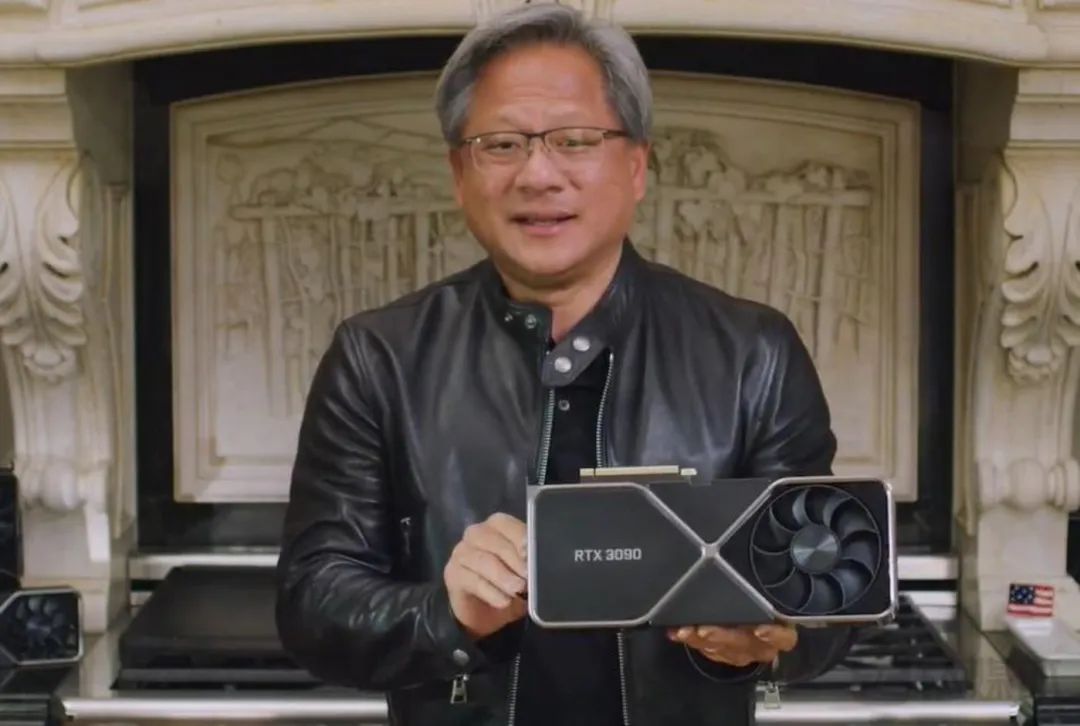
Market news shows that graphics cards began to decline slowly as early as Last November, among which Nvidia GTX1660s dropped by about 400 yuan in 3 months from last November to This January, and then continued to fall sharply. Dealers said, "The fastest time fell 100 yuan a day, continuous decline for 3-4 days." In addition, Australian RTX3080 prices fell 35% in one day. The RTX3090 graphics card in The German market has almost halved from €3,199 in May last year to €1,999.
Recently, a friend of mine found in Shenzhen Huaqiang North Market that the demand for graphics cards, mobile devices and IoT chips has all shown signs of slowing down. "Demand is not good. It's worse than last year."
Since 2022, due to macroeconomic headwinds, conflicts between Russia and Ukraine, local epidemic and other factors, consumer electronics market demand has changed dramatically: high inventory, low demand, plummeting prices, increasing "order cutting storm", which has become an industry trend.
On the inventory front, laptop brands Asustek and Acer are facing "high inventory, low demand," according to Technology News. It said it had 154 and 80 days of inventory, and slowing consumer demand was affecting the chain.
Price and cutting side, due to the supply chain cutting orders and reduced demand, the market price of some consumer grade analog chips of Texas Instruments in March was still about 100 yuan, but now it can be bought at 20 yuan, a drop of up to 80%; Major Chinese Android phones such as Samsung and Xiaomi have cut orders for another 100 million units since the end of March, while Samsung also lowered its 2022 shipment target by about 10 percent to 275 million units.
The slowdown in demand for mobile phones, in particular, is accelerating. Market research firm Counterpoint forecasts that global smartphone shipments will decline by 3% year-on-year in 2022; However, Gartner released the latest report on 30th, global PC and smartphone shipments will shrink this year, and forecast that in 2022, China's smartphone shipments will decrease by 18% compared with last year.
He hui told Ti Media App that the root cause of the slowdown in consumer electronics is not only the slowing demand of the epidemic, but also the longer replacement cycle of mobile phones as a whole and the reduced desire for consumer electronics due to economic uncertainties after the epidemic. "It's not just In China. I think the whole world has this problem."
For TSMC's price hike topic, He Hui believes there are two reasons: one is the global inflation environment, the annual increase of 5% is understandable; Second, TSMC may increase customer concentration through such price increases and form a process of selecting customers.
In Q1 2022, TSMC's smartphone and HIGH-PERFORMANCE computing segments accounted for 40 percent and 41 percent of net revenue, respectively, while iot, automotive, DCE and others accounted for 8 percent, 5 percent, 3 percent and 3 percent, respectively, according to the results.
"The company will continue to monitor customers' high inventory levels," TSMC CEO Victor Wei said at the company's annual shareholders' meeting in early June. "Capacity tends to be tight throughout the year. Demand in some segments, such as PCS, tablets and smartphones, is weakening, but in some areas demand is gradually strengthening."
Compared with the slowdown of mobile chips, automotive chips are still in the dilemma of lack of core.
At the 2022 China Nansha International Integrated Circuit Industry Forum held on June 25, Chen Yudong, president of automotive core parts manufacturer Bosch China, said that its chip products can only meet the average demand of automobile manufacturers at present, and the supply rate is expected to increase to 50% to 60% in the second half of the year, but "lack of core" will still be the theme.
According to Chen yudong, although the size of car chips in the overall chip market is still small, but its impact on the output value magnification factor is tens of thousands of times. For example, a chip of more than ten yuan will affect the sale of a car priced at 100,000 yuan to 200,000 yuan.
He cited the example of a Bosch ESP (body electronic Stabilisation system) product, which he said stopped production after one chip supply failed to keep up, even though it consisted of just six chips from four suppliers. "In the first half of this year, I estimate that the combined capacity of [domestic] companies was affected by 1m units. If you estimate it, $100 billion is gone." He admits.
He Hui told Ti Media App that in addition to nvidia or Qualcomm, which is related to computing power, other automotive chips are mainly in cooperation with Renesas, Toshiba Memory, Stmicroelectronics, Infineon, NXP and other foreign IDM manufacturers, and the mature manufacturing process of automotive chips is still facing a shortage.
"In fact, we have always said that the lack of core is because the car to earn the consumption type, in fact, this is not a serious statement, especially in the upstream semiconductor manufacturing link, the car production line with the production line of consumption is not high. When the COVID-19 epidemic and other factors, car manufacturers closed capacity, procurement supply chain demand fell, but now, in the recovery after the epidemic, the industrialization of new energy vehicles, intelligent is still in the outbreak of growth, market growth, car semiconductor manufacturers can not expand supply." Auto chips cannot be scaled up as fast as consumer electronics chips, especially since they have a dedicated car-grading process, and shortages will continue, He said.
Yuan Feng, general manager of GAC Capital, said the shortage of auto chips will last until 2024.
Self-sufficiency rate is less than 5%, domestic chip supply needs to be enhanced
Statistics from IC Insights, a market research agency, show that in 2021, China's auto chip self-sufficiency rate is still less than 5%.
Zeng qinghong said that chip shortage and other problems on the sustainable development of China's auto industry has become increasingly prominent negative effect, should be increased in China to strengthen the production of car chip standards. He believes that China's high dependence on foreign chip supply has become a potential hazard to the healthy development of the auto industry.
China's auto production fell by 1 million units in the first six months of 2022 due to chip supply issues.
For chip shortage dilemma, car companies and related industry chains are working together to solve. Gac Capital, for example, has invested in Guangdong Semiconductor, a local foundry, also based in Guangzhou, to develop analog chips on 12-inch wafers for future car models, among other things. According to Yuan feng, the two sides have set up a team of 40-50 people for this purpose.
On June 30, Guangdong Semiconductor announced the completion of a new round of 4.5 billion yuan financing. By the gac group, guangzhou, guangdong gain capital holdings management of guangdong province jointly led semiconductor and integrated circuit industry investment fund and other investors including Shanghai, Beijing and other car companies owned by industrial capital, and reputation in yuexiu industrial funds, PCCW capital, industrial funds, walden international, wide hair negotiable securities, science city group, LanPu venture capital, etc.
As one of the pillar industries in China, the sustainable development of automobile industry is seriously affected by the "lack of core", especially the shortage of mainstream mature process chip supply. Experiencing the pain of chip shortage, China's auto industry strengthens the chain and speeds up the layout in the chip field.
However, in the short term, domestic automotive chips can not really "replace" upstream and downstream, oems will still rely on Italy and France, Infineon, Renesas and other automotive chip head enterprises to Bosch assembly, so as to supply oems, after all, the latter technology is more mature, the industry threshold is not so easy to be "replaced" off.
Of course, with the domestic large computing power car chip into the mass production year, some domestic car enterprises and chip enterprises began to deepen the degree of binding, and foreign established chip manufacturers wrestle gradually.
"It can't ship any electronics, cell phones, cars without a chip." He Hui said, domestic semiconductor into the winter of capital.
On June 25, guangdong and Macao semiconductor industry fund, executive partner Liu Dan said that the global semiconductor down cycle, the domestic semiconductor industry into the winter of capital. Wuyuefeng Capital partner Xiong Quan said bluntly, "I agree with the view of capital winter, many new domestic chip enterprises to find investment is very difficult."
But He Hui doesn't entirely agree.
"I think consumer electronics has really hit a low point and it may need something new. On the whole, including automotive chips, HPC chips and other fields, basically belongs to the peak to the plateau. Growth, not recession and the so-called 'winter of capital'." He Hui told titanium media App.
In fact, since 2015, the state has actively supported the semiconductor industry, which is a little too hot, especially the capital is more sensitive, through "throwing money" to get up. But the core lies in that China's semiconductor industry technology reserve, talent reserve is still very weak, domestic resources do not hold up. Semiconductor investment and financing cold, just demand down, the story is not so easy to tell.
Data obtained by Ti Media App from Qichumcha shows that since 2011, China's chip semiconductor circuit has witnessed 3,971 investment and financing events, with the total amount of disclosed financing exceeding one trillion yuan. Among them, there were 492 investment and financing events in 2021, and the total amount of disclosed financing exceeded 387.6 billion yuan, far exceeding 109.769 billion yuan in 2020. In the first three months of 2022, 310 financing events were reported, 4.6 times that of the same period in 2021, and the total amount of disclosed financing exceeded 35 billion yuan, down about 3% year-on-year.
Cyclical downturns, though, are inevitable. But we need to look at things differently. Semiconductors have been at the heart of technological innovation for more than half a century.
The rise of 5G, artificial intelligence (AI), AR/VR, and intelligent Internet of Things (IoT) is ushering in a "golden era for the semiconductor industry," TSMC Chairman Andy Lau wrote in a recent fortune article.
"The next few decades will be a golden age for the semiconductor industry. Over the past 50 years, semiconductor technology development has been like walking in a tunnel, "Liu wrote." We are approaching the exit of the tunnel, and beyond the tunnel there are many more possibilities, from material to architecture innovations that make new paths possible... We are no longer constrained by tunnels and have unlimited room for innovation."
As for future investment direction, Xiao Chu-nan, executive director of China Hing Securities Investment Bank, mentioned that automotive electronics, semiconductor manufacturing, chip design tool EDA, compound semiconductor and other fields are worthy of continued attention.
"The emerging segment industry in the semiconductor field is in its infancy and has not yet developed on a large scale." He Hui told titanium media App.
He Hui stressed that whether it is car use, or industrial chips, foreign do for many years, the threshold of substitution is higher. In the long term, domestic semiconductors will continue to catch up.
At present, the chip industry "fire and ice" pattern, is still likely to last for a long time.
Omdia. Semiconductors are also a long-term bet.
Ti Media App has launched the industry report "Silicon-based World", focusing on the technology and industrial upgrading in the global semiconductor field for a long time and gaining insight into the first-hand information and in-depth trends of the industry.
The global chip and semiconductor industry is suffering from a combination of multiple factors, including the COVID-19 pandemic, global core shortage and slowing demand for mobile phone consumer electronics.
Omdia, a market research agency, recently released a data pointed out that after five consecutive quarters of revenue growth since Q1 2021, the global semiconductor market revenue in Q1 2022 decreased from us $159.35 billion in Q4 2021 to US $159.3 billion, a sequential decrease of 0.03%. First signs of slowing quarterly revenue.
At present, Qualcomm, Intel and other chip giants have begun to "cut single action". Qualcomm has cut orders for the Snapdragon 8 series by about 10 to 15 percent and is expected to cut prices of its two flagship mobile chips by 30 to 40 percent by the end of the year to clear them out, according to Tywind International analyst ð ¹ Intel's CHIEF financial officer Dave Zinsner has said PC chip revenue is in danger of falling.
At the same time, the auto industry is still facing the dilemma of lack of core. In late June, Zeng Qinghong, chairman of GAC Group, said in a speech that in the first half of 2022, the company cut production by 160,000 vehicles and lost about 20 billion yuan in output due to the chip shortage and the epidemic. Gac faced a chip shortage of up to 33, 000 in the second quarter, he said.
Omdia semiconductor chief analyst He Hui said in an exclusive interview with Titanium media App that the entire semiconductor industry has entered a downward cycle. Consumer electronics chip prices fell and demand slowed, but automotive, HPC and other areas are still facing the problem of core shortage. The main reason behind this is that it takes longer to get a new mobile phone, as well as the change in global economy and consumption power after the pandemic, which reduces the desire to buy electronic products.
But That doesn't mean demand for some chips has slowed and the semiconductor industry will decline in the future, He said. Semiconductors are also a long-term bet.
"It is not because of the decline in the mobile phone market in the first half of the year that we can buy (car chips) in the second half. The auto chip production line does not overlap with the consumer electronics production line. He Hui told ti media App that with the explosion of new energy vehicles, data centers and other fields, some chips may still face shortages in 2023.
Consumer electronics chip prices have plunged, but demand for car cores remains high
Consumer electronics such as graphics cards and mobile phones are the first to adjust chip prices.
With the collapse of bitcoin and the withdrawal of "mining tide", the price of "air cards", which had been unaffordable in the past, has finally fallen sharply since the beginning of the year.
Market news shows that graphics cards began to decline slowly as early as Last November, among which Nvidia GTX1660s dropped by about 400 yuan in 3 months from last November to This January, and then continued to fall sharply. Dealers said, "The fastest time fell 100 yuan a day, continuous decline for 3-4 days." In addition, Australian RTX3080 prices fell 35% in one day. The RTX3090 graphics card in The German market has almost halved from €3,199 in May last year to €1,999.
Recently, a friend of mine found in Shenzhen Huaqiang North Market that the demand for graphics cards, mobile devices and IoT chips has all shown signs of slowing down. "Demand is not good. It's worse than last year."
Since 2022, due to macroeconomic headwinds, conflicts between Russia and Ukraine, local epidemic and other factors, consumer electronics market demand has changed dramatically: high inventory, low demand, plummeting prices, increasing "order cutting storm", which has become an industry trend.
On the inventory front, laptop brands Asustek and Acer are facing "high inventory, low demand," according to Technology News. It said it had 154 and 80 days of inventory, and slowing consumer demand was affecting the chain.
Price and cutting side, due to the supply chain cutting orders and reduced demand, the market price of some consumer grade analog chips of Texas Instruments in March was still about 100 yuan, but now it can be bought at 20 yuan, a drop of up to 80%; Major Chinese Android phones such as Samsung and Xiaomi have cut orders for another 100 million units since the end of March, while Samsung also lowered its 2022 shipment target by about 10 percent to 275 million units.
The slowdown in demand for mobile phones, in particular, is accelerating. Market research firm Counterpoint forecasts that global smartphone shipments will decline by 3% year-on-year in 2022; However, Gartner released the latest report on 30th, global PC and smartphone shipments will shrink this year, and forecast that in 2022, China's smartphone shipments will decrease by 18% compared with last year.
He hui told Ti Media App that the root cause of the slowdown in consumer electronics is not only the slowing demand of the epidemic, but also the longer replacement cycle of mobile phones as a whole and the reduced desire for consumer electronics due to economic uncertainties after the epidemic. "It's not just In China. I think the whole world has this problem."
For TSMC's price hike topic, He Hui believes there are two reasons: one is the global inflation environment, the annual increase of 5% is understandable; Second, TSMC may increase customer concentration through such price increases and form a process of selecting customers.
In Q1 2022, TSMC's smartphone and HIGH-PERFORMANCE computing segments accounted for 40 percent and 41 percent of net revenue, respectively, while iot, automotive, DCE and others accounted for 8 percent, 5 percent, 3 percent and 3 percent, respectively, according to the results.
"The company will continue to monitor customers' high inventory levels," TSMC CEO Victor Wei said at the company's annual shareholders' meeting in early June. "Capacity tends to be tight throughout the year. Demand in some segments, such as PCS, tablets and smartphones, is weakening, but in some areas demand is gradually strengthening."
Compared with the slowdown of mobile chips, automotive chips are still in the dilemma of lack of core.
At the 2022 China Nansha International Integrated Circuit Industry Forum held on June 25, Chen Yudong, president of automotive core parts manufacturer Bosch China, said that its chip products can only meet the average demand of automobile manufacturers at present, and the supply rate is expected to increase to 50% to 60% in the second half of the year, but "lack of core" will still be the theme.
According to Chen yudong, although the size of car chips in the overall chip market is still small, but its impact on the output value magnification factor is tens of thousands of times. For example, a chip of more than ten yuan will affect the sale of a car priced at 100,000 yuan to 200,000 yuan.
He cited the example of a Bosch ESP (body electronic Stabilisation system) product, which he said stopped production after one chip supply failed to keep up, even though it consisted of just six chips from four suppliers. "In the first half of this year, I estimate that the combined capacity of [domestic] companies was affected by 1m units. If you estimate it, $100 billion is gone." He admits.
He Hui told Ti Media App that in addition to nvidia or Qualcomm, which is related to computing power, other automotive chips are mainly in cooperation with Renesas, Toshiba Memory, Stmicroelectronics, Infineon, NXP and other foreign IDM manufacturers, and the mature manufacturing process of automotive chips is still facing a shortage.
"In fact, we have always said that the lack of core is because the car to earn the consumption type, in fact, this is not a serious statement, especially in the upstream semiconductor manufacturing link, the car production line with the production line of consumption is not high. When the COVID-19 epidemic and other factors, car manufacturers closed capacity, procurement supply chain demand fell, but now, in the recovery after the epidemic, the industrialization of new energy vehicles, intelligent is still in the outbreak of growth, market growth, car semiconductor manufacturers can not expand supply." Auto chips cannot be scaled up as fast as consumer electronics chips, especially since they have a dedicated car-grading process, and shortages will continue, He said.
Yuan Feng, general manager of GAC Capital, said the shortage of auto chips will last until 2024.
Self-sufficiency rate is less than 5%, domestic chip supply needs to be enhanced
Statistics from IC Insights, a market research agency, show that in 2021, China's auto chip self-sufficiency rate is still less than 5%.
Zeng qinghong said that chip shortage and other problems on the sustainable development of China's auto industry has become increasingly prominent negative effect, should be increased in China to strengthen the production of car chip standards. He believes that China's high dependence on foreign chip supply has become a potential hazard to the healthy development of the auto industry.
China's auto production fell by 1 million units in the first six months of 2022 due to chip supply issues.
For chip shortage dilemma, car companies and related industry chains are working together to solve. Gac Capital, for example, has invested in Guangdong Semiconductor, a local foundry, also based in Guangzhou, to develop analog chips on 12-inch wafers for future car models, among other things. According to Yuan feng, the two sides have set up a team of 40-50 people for this purpose.
On June 30, Guangdong Semiconductor announced the completion of a new round of 4.5 billion yuan financing. By the gac group, guangzhou, guangdong gain capital holdings management of guangdong province jointly led semiconductor and integrated circuit industry investment fund and other investors including Shanghai, Beijing and other car companies owned by industrial capital, and reputation in yuexiu industrial funds, PCCW capital, industrial funds, walden international, wide hair negotiable securities, science city group, LanPu venture capital, etc.
As one of the pillar industries in China, the sustainable development of automobile industry is seriously affected by the "lack of core", especially the shortage of mainstream mature process chip supply. Experiencing the pain of chip shortage, China's auto industry strengthens the chain and speeds up the layout in the chip field.
However, in the short term, domestic automotive chips can not really "replace" upstream and downstream, oems will still rely on Italy and France, Infineon, Renesas and other automotive chip head enterprises to Bosch assembly, so as to supply oems, after all, the latter technology is more mature, the industry threshold is not so easy to be "replaced" off.
Of course, with the domestic large computing power car chip into the mass production year, some domestic car enterprises and chip enterprises began to deepen the degree of binding, and foreign established chip manufacturers wrestle gradually.
"It can't ship any electronics, cell phones, cars without a chip." He Hui said, domestic semiconductor into the winter of capital.
On June 25, guangdong and Macao semiconductor industry fund, executive partner Liu Dan said that the global semiconductor down cycle, the domestic semiconductor industry into the winter of capital. Wuyuefeng Capital partner Xiong Quan said bluntly, "I agree with the view of capital winter, many new domestic chip enterprises to find investment is very difficult."
But He Hui doesn't entirely agree.
"I think consumer electronics has really hit a low point and it may need something new. On the whole, including automotive chips, HPC chips and other fields, basically belongs to the peak to the plateau. Growth, not recession and the so-called 'winter of capital'." He Hui told titanium media App.
In fact, since 2015, the state has actively supported the semiconductor industry, which is a little too hot, especially the capital is more sensitive, through "throwing money" to get up. But the core lies in that China's semiconductor industry technology reserve, talent reserve is still very weak, domestic resources do not hold up. Semiconductor investment and financing cold, just demand down, the story is not so easy to tell.
Data obtained by Ti Media App from Qichumcha shows that since 2011, China's chip semiconductor circuit has witnessed 3,971 investment and financing events, with the total amount of disclosed financing exceeding one trillion yuan. Among them, there were 492 investment and financing events in 2021, and the total amount of disclosed financing exceeded 387.6 billion yuan, far exceeding 109.769 billion yuan in 2020. In the first three months of 2022, 310 financing events were reported, 4.6 times that of the same period in 2021, and the total amount of disclosed financing exceeded 35 billion yuan, down about 3% year-on-year.
Cyclical downturns, though, are inevitable. But we need to look at things differently. Semiconductors have been at the heart of technological innovation for more than half a century.
The rise of 5G, artificial intelligence (AI), AR/VR, and intelligent Internet of Things (IoT) is ushering in a "golden era for the semiconductor industry," TSMC Chairman Andy Lau wrote in a recent fortune article.
"The next few decades will be a golden age for the semiconductor industry. Over the past 50 years, semiconductor technology development has been like walking in a tunnel, "Liu wrote." We are approaching the exit of the tunnel, and beyond the tunnel there are many more possibilities, from material to architecture innovations that make new paths possible... We are no longer constrained by tunnels and have unlimited room for innovation."
As for future investment direction, Xiao Chu-nan, executive director of China Hing Securities Investment Bank, mentioned that automotive electronics, semiconductor manufacturing, chip design tool EDA, compound semiconductor and other fields are worthy of continued attention.
"The emerging segment industry in the semiconductor field is in its infancy and has not yet developed on a large scale." He Hui told titanium media App.
He Hui stressed that whether it is car use, or industrial chips, foreign do for many years, the threshold of substitution is higher. In the long term, domestic semiconductors will continue to catch up.
At present, the chip industry "fire and ice" pattern, is still likely to last for a long time.


